
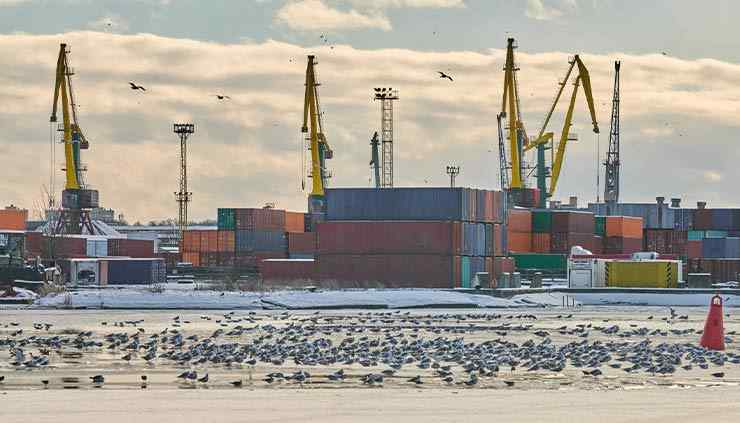
The world does not move in isolation. Every war, every tariff, every barrel of oil priced at a premium sends ripples across the globe, and those ripples hit African import and export businesses with a particular kind of force. Not because Africa is weak, but because the systems African businesses depend on were never built with Africa’s interests at the centre.
2025 has definitely been one of the most turbulent years in recent memory for global trade. And if you run an import or export business on the African continent, or if you sell African products to the world through e-commerce, you are feeling it right now in ways that are impossible to ignore.
Trump’s Tariff Policies and What They Mean for African Trade
When the United States moves, the world adjusts. The return of aggressive tariff policies under the Trump administration has sent shockwaves through global supply chains, and Africa is not insulated from the impact.
Many African countries have historically benefited from preferential trade access to the American market through frameworks like AGOA, the African Growth and Opportunity Act. But in a climate where the United States is raising tariffs broadly and renegotiating trade relationships on its own terms, that access feels increasingly fragile. African exporters who built their business models around American market entry are now navigating new levels of uncertainty.
Beyond direct tariffs, there is the broader effect. When the United States engages in trade wars, global supply chains restructure. Shipping routes shift. Manufacturing relocates. The cost of raw materials fluctuates. African businesses that import goods, machinery, electronics, and raw inputs from countries caught in the tariff crossfire find themselves absorbing costs that were never part of their original calculations. Margins shrink. Planning becomes guesswork.
For African e-commerce businesses selling internationally like BaobabMart, the situation adds another layer of complexity. Products moving into the American market now face an unpredictable cost environment. What was profitable last semester may not be profitable this semester.
High Oil Prices and the Cost of Moving Goods Across a Continent

Oil prices do not just affect what you pay at the pump. They determine the cost of moving every single product from the factory floor to the customer’s door. And for African businesses, where infrastructure gaps already make logistics expensive and unreliable, rising oil prices are a compounding disaster.
Air freight costs have risen significantly. Sea freight rates remain elevated. But the pain is perhaps most acute at the local level within Africa itself. Road transport is the backbone of intra-African trade. The truck that carries goods from a warehouse in Douala to a distribution point inland and the motorcycle delivery service doing last-mile fulfilment in Lagos or Bamako, all of it runs on fuel. When oil prices spike, those costs get passed down the chain until they land on the business owner and ultimately the customer.
For e-commerce businesses in particular, this creates a brutal squeeze. Shipping was already one of the biggest barriers to conversion, as any African online retailer knows intimately. Rising fuel costs push those shipping fees even higher, making it harder to offer competitive rates to international customers and threatening the unit economics of every order.
There is also the knock-on effect on manufacturing. Many African producers rely on imported energy inputs. When those costs rise, production costs rise. The price of the finished product goes up. And in a global market where customers have plenty of alternatives, price sensitivity is all that matters.
The US/Israel-Iran Conflict and the Fragility of Global Shipping Routes

The escalating military and geopolitical tensions between the United States, Israel, and Iran have introduced a level of risk to global shipping that the industry has not seen in years. The Strait of Hormuz, through which a significant portion of the world’s oil and goods flow, sits at the heart of this conflict zone. When that corridor is threatened, insurers raise premiums, shipping companies reroute vessels, and delivery timelines stretch in ways that spread outward across every connected trade route in the world
For African importers, this means longer wait times and higher costs for goods from Asia and the Middle East, both of which are critical trading partners for the continent. Supply chains that were already fragile coming out of the post-pandemic period are being tested again. Businesses that depend on predictable restocking cycles are finding it impossible to maintain that predictability, not because of anything they did wrong, but because a conflict thousands of miles away has made the ocean between them and their suppliers a more dangerous and more expensive place to operate.
African exporters face a mirror version of the same problem. Getting products to international buyers on time, at a cost that makes commercial sense, is becoming harder. And as Western nations align themselves with one side of this conflict and impose fresh sanctions and restrictions on Iranian-linked trade routes and financial systems, African businesses that have built relationships in the Middle East region find themselves caught in a geopolitical crossfire they never signed up for.
For small and medium-sized businesses, which make up the vast majority of African import and export activities, these disruptions do not just affect profit margins. They threaten survival.
The Currency Pressure Nobody Is Talking About Enough
Layered beneath all of these disruptions is a currency crisis that deserves more attention than it gets. As global uncertainty drives investors toward the US dollar as a haven, African currencies have come under significant pressure. The West and East Francs, the Nigerian naira, the Ghanaian cedi, the Kenyan shilling, and many other currencies have experienced sharp depreciations that make importing dramatically more expensive.
When your revenue is in local currency, and your import costs are priced in dollars, every percentage point of currency depreciation eats directly into your business. For e-commerce businesses trying to source inventory internationally, this is not an abstract financial problem. It is a week-by-week operational crisis.
The Intra-African Trade Opportunity Being Left on the Table
Here is the uncomfortable truth that all of these disruptions reveal: African businesses are still far too dependent on trade routes and relationships that run through the West or through Asia. The African Continental Free Trade Area (AfCFTA) exists precisely to address this, creating the framework for a single African market of over a billion people. But implementation has been slow, and the infrastructure to support seamless intra-African trade is still being built.
The disruptions of 2025-early 2026 are making the case for intra-African trade more urgent than any policy paper ever could. If road transport within Africa is expensive, invest in it. If cross-border payments between African countries are slow and costly, fix it. If a business in Cameroon cannot easily sell to a customer in Senegal, that is a failure with a solution, and the global instability pressing in from outside should accelerate the urgency with which African governments and businesses pursue that solution.
What This Means for African E-Commerce Businesses Right Now
If you run an e-commerce business on the African continent, whether you are exporting African-made products to the diaspora or importing goods to sell locally, the current environment demands a strategic response, not just survival mode.
- Diversify your markets. Dependence on a single international market, particularly the United States, is a vulnerability that 2025 has exposed brutally. Building presence across multiple markets such as Europe, Asia, Australia, the Middle East, and other African nations is not optional anymore; it is essential.
- Reduce your exposure to volatile shipping costs wherever possible. The bulk shipping model, consolidating shipments to fulfilment points closer to customers, is not just a cost-saving strategy. In an environment of high oil prices, political conflicts, and unstable shipping routes, it is a resilience strategy.
- Watch your currency exposure carefully. If your costs are in dollars and your revenue is in local currency, hedging that risk, even informally, by building larger cash buffers, is basic financial hygiene in this environment.
- And perhaps most importantly: keep building. The disruptions are real, but they are also revealing the gaps that African businesses are uniquely positioned to fill. The world is rearranging itself, and within that rearrangement are genuine opportunities for African entrepreneurs who are paying attention.
The Bigger Picture: African Import and Export Businesses in 2026
Africa is not a passive observer of these global disruptions. The continent is a major supplier of the raw materials the world depends on: oil, minerals, and agricultural products, and yet African businesses consistently capture less value from those resources than they should. The tariff wars, the oil price volatility, and the geopolitical instability are not just threats. They are a reminder of why building genuinely resilient, diversified, African-owned trade and e-commerce infrastructure matters so deeply.
The road is hard. The systems are stacked in ways that require constant navigation. But African import and export businesses are not new to adversity, and the ones paying attention in 2026 are the ones who will be standing and leading when the dust settles.
These disruptions are hitting real businesses not only across Africa, but worldwide every single day. Are you an importer, exporter, or e-commerce entrepreneur feeling the pressure? What is affecting your business the most right now?
Drop your thoughts in the comments, we read every one. And if this resonated with you, share it with someone who needs to see it.