
In 2025, Africa receives more money from the diaspora and conducts more global trade than ever before, yet moving that money across borders remains painfully expensive, slow, and unpredictable. These challenges to international payments in Africa affect everyone: families waiting for remittances, freelancers chasing overseas income, importers paying suppliers, and exporters trying to get paid on time.
Contents
What “International Payments” Means for Africa
By “international payments in Africa,” we’re talking about any flow of money between the continent and the rest of the world, far beyond simple bank wires. These transactions power personal lives and business engines alike. Key examples include:
- Diaspora remittances: A nurse in the UK or a construction worker in the Gulf sending monthly support to family in Lagos or Accra to cover school fees, medical bills, or daily groceries.
- Import/export settlements: An Ethiopian coffee exporter waiting for payment from a European buyer, or a Kenyan textile importer paying a Chinese supplier for raw fabrics.
- Cross-border services: Freelancers on platforms like Upwork receiving gigs from US clients, students wiring tuition to universities in Canada, or digital marketers billing clients in Asia for ad campaigns.
- Hybrid transfers: Funds moving from foreign bank accounts directly into African mobile money wallets, like M-Pesa in Kenya or MTN MoMo in Ghana, blending global and local systems.
These aren’t abstract; According to the World Bank, in 2024 alone, remittances hit $96.4 billion continent-wide, fueling everything from household budgets to small business startups. But the delivery path for international payments in Africa is riddled with obstacles.
Major Issues with International Payments in Africa
The problems with international payments in Africa aren’t new, but in 2025, they’ve been sharper than ever, exacerbated by lingering inflation, geopolitical tensions, and uneven digital rollout. Here’s a deep dive into the core challenges.
High Costs and Expensive Fees
No issue stings more than the price tag. The World Bank’s Remittance Prices Worldwide report for Q1 2025 pegs the average cost of sending $200 to Sub-Saharan Africa at 8.78%, up slightly from 7.73% in Q1 2024, and well above the global average of 6.49%. That’s $17.56 vanishing into thin air for every $200 sent, often from already stretched migrant workers. RemitScope’s data echoes this, clocking an overall African average of 8.2% for Q1 2025, with regional spikes: 9.9% to East Africa, 8.9% to Southern Africa, and a “better” 5.9% to West Africa.
Why so steep? When it comes to international payments in Africa, fees pile up from currency conversion markups (up to 3-5%), intermediary bank charges ($10-30 per leg), and compliance overheads. Multiple conversion layers, say, euros to dollars to CFA francs, add even more. For small transfers, which dominate remittances (often under $300), the proportional hit is devastating, turning vital support into a luxury.
Currency Volatility and FX/Conversion Problems
Africa’s 40+ currencies are a patchwork of volatility, from the naira’s wild swings in Nigeria to Zimbabwe’s hyperinflation scars. Most international payments in Africa funnel through “hard” currencies like USD or EUR, forcing double conversions that erode value. A sender locks in a rate on Monday, but by Friday’s receipt, a 2-5% devaluation can slash the real amount by another $10-20.
The absence of a pan-African currency or unified settlement system (despite PAPSS progress) means heavy reliance on foreign exchange, exposing recipients to forex risks and slowing the development of international payments in Africa.
In 2025, with global rates volatile post-Ukraine war and US elections, this unpredictability has spiked failure rates by 15% in volatile corridors like Nigeria-US, per Fincra reports.
Slow or Unreliable Processing/Settlement Times
Speed is a luxury. Traditional correspondent banking, where your money hops through 2-5 global banks, can take 3-10 days, or longer for non-USD routes. Liquidity crunches in emerging markets amplify this; a $500 freelance payout might sit idle for a week due to end-of-day cutoffs or holiday blackouts.
Rejections plague 10-20% of attempts, thanks to mismatched SWIFT codes, incomplete KYC docs, or automated flags on “suspicious” African-origin transfers. In rural Cameroon, where power outages are routine, even digital confirmations fail, leaving senders in limbo.
Fragmented Regulatory and Compliance Rules
Africa’s regulatory mosaic is a nightmare: Nigeria’s strict CBN forex caps clash with South Africa’s SARB transparency mandates, while Egypt’s capital controls limit outflows. AML/KYC demands vary wildly; uploading a passport in one country might not suffice in another, piling on paperwork and rejection risks.
Some nations, like Algeria or Sudan, cap outbound transfers at $5,000-10,000 annually, strangling business growth. This fragmentation jacks up compliance costs by 20-30%, per Rapyd’s 2025 analysis, and deters smaller players from global trade.
Limited Financial and Digital Infrastructure in Many Parts of Africa
Over 50% of Africans are unbanked, per 2025 GSMA data, leaning on cash or informal hawala networks that can’t touch international rails. Even mobile money powerhouses like Kenya see uneven global links; rural wallet users in Mali or Chad often lack 4G or electricity for seamless receipt.
Digital divides persist: only 40% broadband penetration in Sub-Saharan Africa, versus 80% in Europe. This leaves remote artisans or farmers, cut off, forcing costly urban detours.
Remittance Costs Remain Stubbornly High Despite Improvements
Trends show glacial progress: from 9.8% in 2016 to 8.2% in Q1 2025, a mere 1.6-point drop over nearly a decade. Small transfers bear the brunt; a $100 family top-up loses $8-9, crippling low-income homes. The UN’s SDG 10.c goal of ≤3% by 2030 feels worlds away, with Africa labelled “the most expensive region to send money to” by TransUnion.
Country breakdowns reveal stark disparities: Tanzania tops infamy at 57% for $200 (yes, $115 fees!), followed by Comoros (25%), Gambia (20%), and Zimbabwe (18%). Even “cheaper” spots like Ghana (4-6%) lag global norms.
What This Means for People and Businesses
The ripple effects of international payments in Africa are personal and profound. For remittance-dependent families like 40% of Cameroonian households, for example, 8-9% fees mean $20-30 less per $300 monthly send, delaying rent or school payments and straining budgets amid 2025’s 5-7% inflation.
Businesses suffer too: A Yaoundé importer pays 10% extra on $10,000 machinery orders due to delays and FX hits, eroding margins. Exporters like Cameroon’s cocoa farmers risk contract breaches from late receipts, while freelancers lose gigs to unreliable payouts. Economically, this chokes FDI (down 12% in 2025, per AfDB) and inclusion, locking 300 million in informality.
In Cameroon specifically, where remittances hit $500 million yearly, high fees (7-9% average) exacerbate poverty; a delayed transfer might mean skipped meals or halted small ventures.
Recent Data: Fees, Costs, and How Africa Compares
Fresh Q3 2025 World Bank stats confirm the malaise: Sub-Saharan costs at 8.5%, versus 5.8% in East Asia. Corridors vary wildly, UK to Nigeria: 6-8%; US to Tanzania: 15-20%. Banks charge 14.55% on average, while digital options hover at 4-6%.
Globally, digital remittances cost 5% vs. 7% non-digital, but Africa’s 7.9% Q4 2024 baseline (latest full-year) underscores the lag. The 3% SDG chasm yawns wider.
That slow 1.6-point decline since 2016? It’s progress, but at this pace, Africa misses 2030 targets by a mile. Small sends amplify pain, a $200 family lifeline shrinks by $16-18, hitting the poorest hardest. Corridor inequities persist: high-volume US-Nigeria dips to 7%, but low-competition Gambia-Zambia soars to 12%.
Beyond fees, volatility (e.g., 10% naira drop in Q2 2025) and access barriers compound woes, per Tranglo. Without systemic overhauls, better competition, and infra relief stays elusive
Signs of Progress, But the Gap Remains Huge
Positives: Digital channels now undercut banks by 40-50%, with mobile money hitting $1.1 trillion in 2024 transactions. 26 African countries run instant systems in 2025, up from 20 in 2023.
To accelerate: Boost provider rivalry, harmonise regs via AfCFTA, invest in broadband (target: 50% penetration by 2030), and push inclusion via sandboxes. World Bank urges $10B annual infra spend to hit SDGs
- Fintechs and digital remittance services have brought fees down from nearly 10% a decade ago, and direct-to-wallet options are improving speed in some corridors. Yet Sub-Saharan Africa is still nowhere near the United Nations’ 3% target by 2030, and traditional banking channels remain stubbornly expensive and slow. Making international payments in Africa looks like an unachievable dream.
- If you’re a Cameroonian receiving diaspora cash, expect 8-9% evaporation $24 lost on $300, enough for a week’s groceries. Small sends compound this, slashing support for education or startups.
- For broader payments imports, tuition, the unpredictability via banks (fees + delays) risks defaults or lost opportunities. Shift to fintechs? Vital, but infra/regs must evolve to end the burden.
How Baobabmart Eliminates These International Payment Headaches
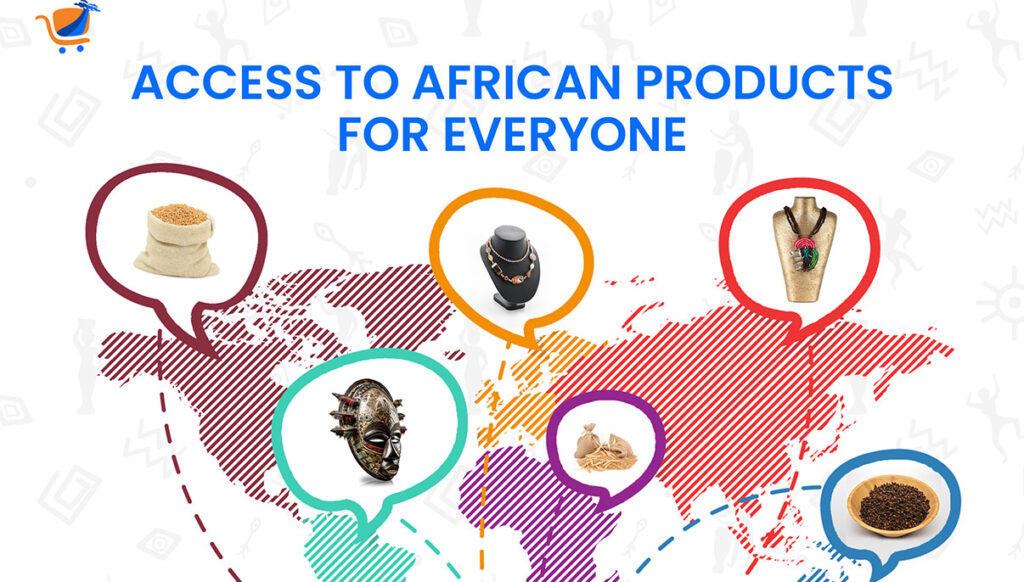
While the broader system catches up, one platform has already solved the problem for thousands of African sellers and global buyers: Baobabmart, the best African marketplace for authentic fashion, beauty, home décor, groceries, and cultural treasures.
- Baobabmart is transforming international payments in Africa from pain to pleasure for buyers and sellers alike.
- Shoppers worldwide, diaspora in Toronto or tourists in Tokyo, pay seamlessly via Visa, Mastercard, Stripe, or PayPal. Instant, in your currency, with fees under 2-3% (far below 8% averages), no volatility traps or delays. Mobile-optimised checkouts handle spotty connections, secured by 3D Secure.
- Sellers in Cameroon or Kenya get funds fast, often same-day, bypassing correspondent mazes. This empowers artisans: a $100 kente sale arrives intact, funding more creation without forex bites.
Baobabmart isn’t waiting for systemic fixes; it’s delivering them now, blending global ease with African heart. Result? Thriving trade in fashion, beauty, and crafts, minus the headaches.
Ready to experience international payments in Africa the way they should be: fast, fair, and frustration-free? Shop Baobabmart today: the best African marketplace where the world meets Africa’s finest craftsmanship, and global money flows without the usual pain.