

Africa is home to the world’s most vibrant mobile money revolution, yet cross-border payments in Africa remain painfully slow, expensive, and complicated. A trader in Ghana can send money to a relative in the same country in seconds for pennies, but paying a supplier in Kenya or receiving payment from a customer in Belgium often takes days, costs 8–12% in fees, and forces both parties to navigate currency conversion chaos.
Cross-border payments are essential for facilitating trade between African nations and beyond.
These bottlenecks are the silent killer of intra-African trade and e-commerce growth. Fortunately, the continent is now fixing this faster than most people realise.
Table of Contents
The Hidden Cost of Broken Cross-Border Payments in Africa
Cross-border payments in Africa are subject to so many challenges which slow business transactions within and out of the continent;
- By improving cross-border payments, we can unlock the full potential of African businesses.
- Efficient cross-border payments can transform the landscape of commerce in Africa.
- Without efficient cross-border payments, businesses struggle to thrive in the digital economy.
Imagine an artisan in Mali selling a hand-dyed Bogolan blanket to a buyer in Canada. The buyer wants to pay instantly. The seller wants to be paid in West African francs without losing 10–15% to dollar conversion and bank charges. Instead, the money has to leave Canada as CAD, convert to US dollars (because most international rails demand it), then convert again to CFA francs, losing value twice and taking three to seven days to arrive. Along the way, both parties pay high bank fees, Western Union or MoneyGram charges, or opaque fintech markups.
This is the daily reality for millions of African businesses and consumers. The African Continental Free Trade Area (AfCFTA) may have removed tariffs on 90% of goods, but until cross-border payments become fast, cheap, and predictable, the dream of a single African market will stay just that, a dream.
High fees discourage small transactions. Unpredictable arrival times kill cash flow for artisans and small vendors. Fear of fraud makes buyers hesitate. Limited acceptance of cards and low banking penetration in many regions force platforms to juggle dozens of local payment methods. All of this directly slows the growth of African e-commerce and keeps talented creators locked out of regional and global markets.
What Are the Main Problems with Cross-Border Payments in Africa?
Even in 2025, cross-border payments across Africa remain one of the biggest pain points for businesses, traders, artisans, and everyday consumers. Here are the five core issues that continue to make cross-border payments slow, expensive, and frustrating:
1. High Costs and Hidden Fees

Cross-border payments in Africa are among the most expensive in the world. Fees typically range from 8–12% and can climb as high as 20% in certain corridors, driven by currency conversion charges, intermediary bank fees, and opaque mark-ups. Sending money within the continent still costs “significantly more” than the global average (AZA Finance +2, blog.seerbit.com +2, tryduplo.com +1)
2. Slow and Unreliable Settlement Times
A typical cross-border payment between African countries still takes 3–7 days or longer, because of legacy banking systems and multiple intermediary banks. These delays disrupt cash flow for SMEs, importers, exporters, and anyone relying on predictable timing. (AZA Finance +2, Fincra Business Blog +2, starfm.ng +2)
3. Currency Conversion Issues and FX Volatility

Many African currencies experience sharp fluctuations, eroding value between initiation and receipt. Even digital cross-border payments are often forced to route through USD or EUR, creating double conversions and extra losses. (tryduplo.com +2, McKinsey & Company +2, Fincra Business Blog +2)
4. Fragmented Regulation and Incompatible Systems
Each country has its own KYC/AML rules, foreign-exchange controls, and payment infrastructure. There is still no unified, continent-wide payment rail, adding complexity, compliance costs, and delays. (South African Reserve Bank +3, tryduplo.com +3, TransUnion +2, Fincra Business Blog +2)
5. Limited Financial Inclusion, Especially Outside Urban Areas
Around 40% of sub-Saharan African adults remain unbanked or underbanked. In rural and informal economies, cash is still dominant, slowing the shift to seamless digital cross-border payments. (Fincra Business Blog +2, Financier Worldwide +1)
These persistent challenges with cross-border payments create a vicious cycle that stifles intra-African trade, but innovative solutions like PAPSS, mobile-money interoperability, and platforms such as Baobabmart are rapidly breaking them down.
The Game-Changing Solutions Already Rolling Out
The breakthrough is finally here, and it goes by the name PAPSS: the Pan-African Payment and Settlement System. Launched by Afreximbank in partnership with African central banks, PAPSS allows instant cross-border payments in local currencies across participating countries. No more forced dollar conversion. No more waiting days for settlement. A payment from Kenya to Ghana now clears in seconds at a fraction of the previous cost.

Baobabmart exemplifies how seamless cross-border payments can facilitate business growth.
At the same time, mobile money interoperability is expanding rapidly. Networks that once operated in silos are linking up, letting an MTN Mobile Money user in Uganda pay an Airtel Money user in Zambia directly. Universal QR codes, common APIs, and ISO 20022 messaging standards are creating a payment layer that works the same way across borders, banks, telcos, and fintechs.
Governments and regulators are harmonising rules, creating continental sandboxes for innovation, and pushing financial literacy campaigns so that even first-time internet users feel safe sending money online. Public-private partnerships are laying fibre optic cables, building national digital IDs, and expanding agent networks into the remotest villages.
How Baobabmart is the Standard for Frictionless Payments in African E-Commerce
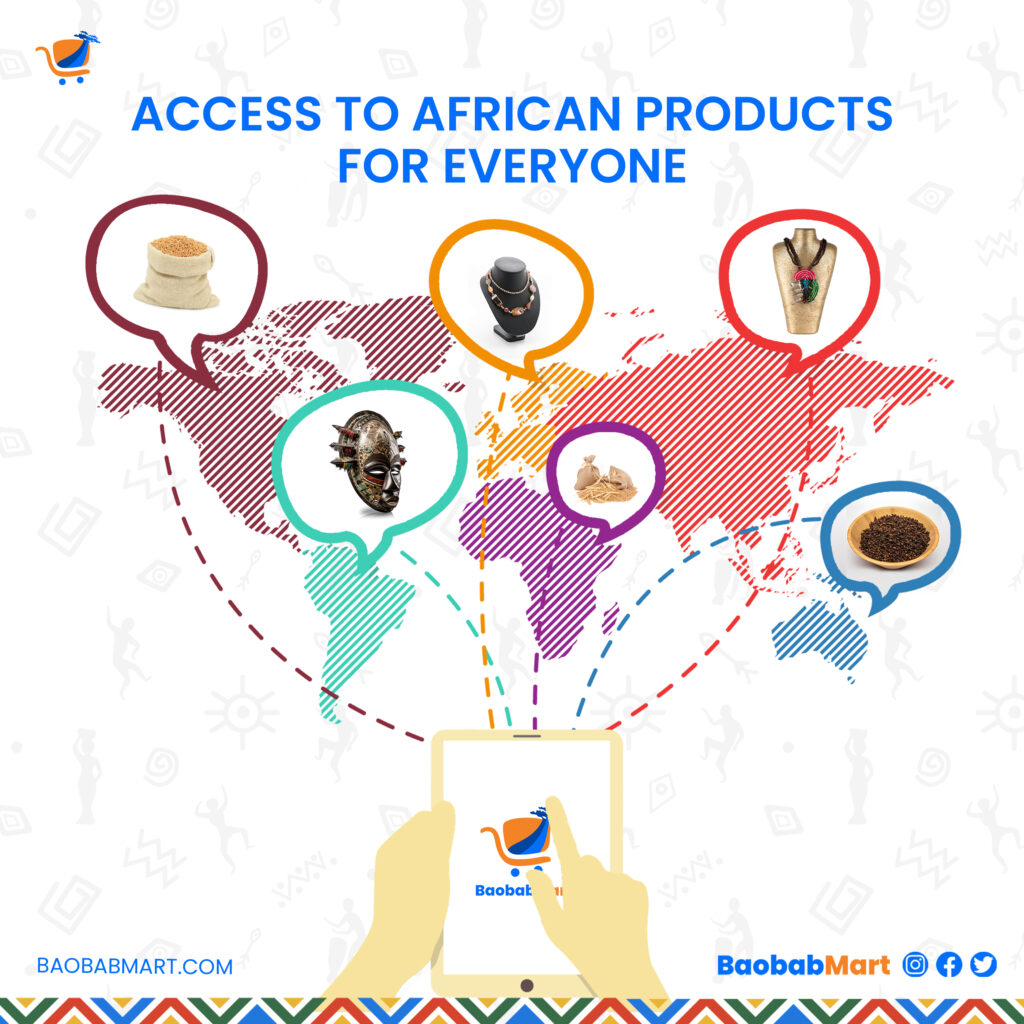
While the big systems are being built, one marketplace has already mastered the art of making payments feel effortless for buyers and sellers across the continent: Baobabmart, widely celebrated as the best African marketplace for authentic fashion, beauty, home décor, and cultural treasures.
Every customer on Baobabmart is met with a carefully selected range of secure, trusted, and convenient payment options that work seamlessly across the continent and beyond: international cards (Visa and Mastercard), Stripe, and PayPal. These globally recognised methods mean that whether a shopper is in Nairobi, Lagos, London, or New York, they can complete their purchase in seconds using the payment option they already know and trust.
Ensuring reliable cross-border payments is critical for customer confidence in e-commerce.
- This straightforward, reliable approach removes one of the biggest hurdles for first-time online buyers across Africa and the diaspora: the fear that cross-border payments will be complicated, unsafe, or simply won’t work. On Baobabmart, it always works smoothly, securely, and instantly, giving every shopper the confidence to click “Buy Now” without hesitation.
- Security and transparency are non-negotiable. Every transaction is encrypted end-to-end, and customers receive instant email confirmations. Sellers see funds reflected almost immediately, which means artisans no longer have to wait weeks to restock materials after a sale.
- Perhaps most importantly, Baobabmart has earned deep trust across the continent by being relentlessly customer-focused. Clear return policies, real-time order updates, and responsive support in local languages turn every purchase into a confidence-building experience. Buyers know their money is safe. Sellers know they will be paid quickly and fairly.
This trust is why Baobabmart has become the preferred marketplace for thousands of African creators and diaspora customers alike. When you shop on Baobabmart, you’re not just buying a handwoven basket or organic cocoa butter; you’re participating in a payment ecosystem that respects African realities and removes the stress that once defined online shopping on the continent.
The future of African trade relies heavily on efficient cross-border payments.
The Future Is Local, Instant, and Truly African
As PAPSS expands to every corner of Africa, as mobile money networks become fully interoperable, in 2024, Africa dominated the global mobile money market both in volume and value, according to a new report released on April 8 by GSMA, the global association for mobile network operators. As digital literacy continues to rise, cross-border payments in Africa will soon be as seamless as sending a WhatsApp message.
Leading that future today is Baobabmart, the best African marketplace that proves cross-border payments don’t have to be a problem. By offering diverse, secure, mobile-first payment options and building an unbreakable trust with every transaction, Baobabmart has set the standard for what African e-commerce can and should feel like.